Large Window Surfaces Increase the Need for Solar Shading
With warmer summers and the growing popularity of large window surfaces, interest in solar shading has risen significantly. The need for shading isn’t limited to summer alone. Already in late winter, the sun shines strongly through the windows, pleasantly heating interior spaces. At that time of year, the sun is much lower than in summer, which allows it to beam through windows more easily.
Effective solar shading prevents interior spaces from overheating and thereby reduces the need for cooling. In the best-case scenario, it may even allow for a smaller cooling system to be installed. In Norway, solar shading is mandatory in all new buildings. In Finland, this is not yet the case, but fortunately, builders are increasingly recognizing the benefits of solar shading in terms of both energy efficiency and living comfort.
Thoughtful Architectural Design Matters
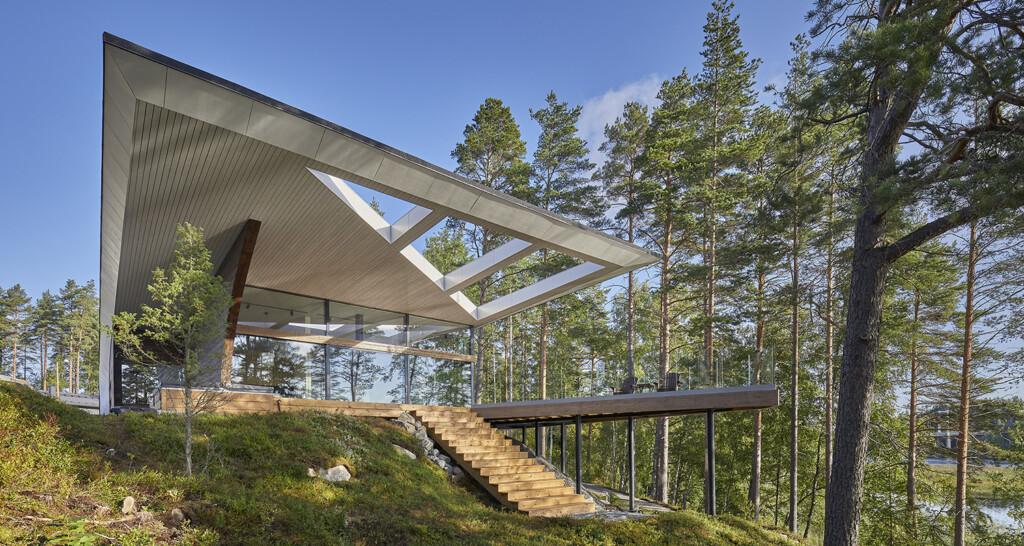
Solar shading begins with the placement of buildings on the plot. Architectural design plays the biggest role in achieving effective shading. Naturally, north-facing windows don’t usually need shading. But if the best views and the desire for large windows face south, solar shading becomes essential. Roof overhangs and canopies are especially useful in blocking the high summer sun. In warmer countries, you often see integrated architectural solutions like shutters and sliding slatted panels in front of window walls.
Solar Control Glass Also Blocks UV Radiation
In Finland, separate solutions from the architecture have traditionally been more popular. Today, it’s possible to choose solar control glass for windows. These reduce incoming heat radiation by several tens of percent compared to standard windows. Solar control glass also blocks UV radiation, which protects surfaces, furniture, and textiles from discoloration. This glass is slightly darker than standard glass, which also helps reduce glare. However, for the same reason, some may choose not to use it, as the slight tint affects the view through the window.
External or Internal Screen Blinds Are a Popular Choice
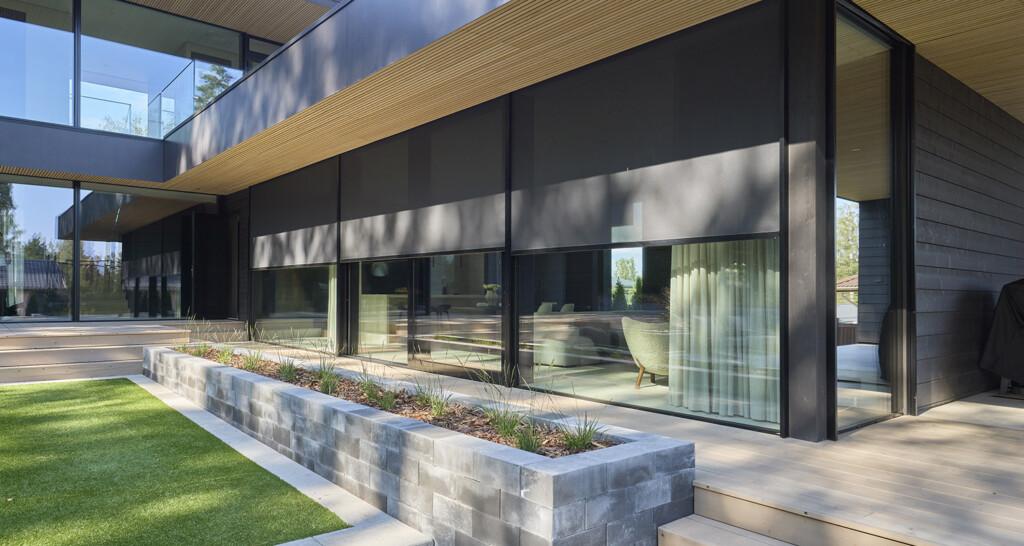
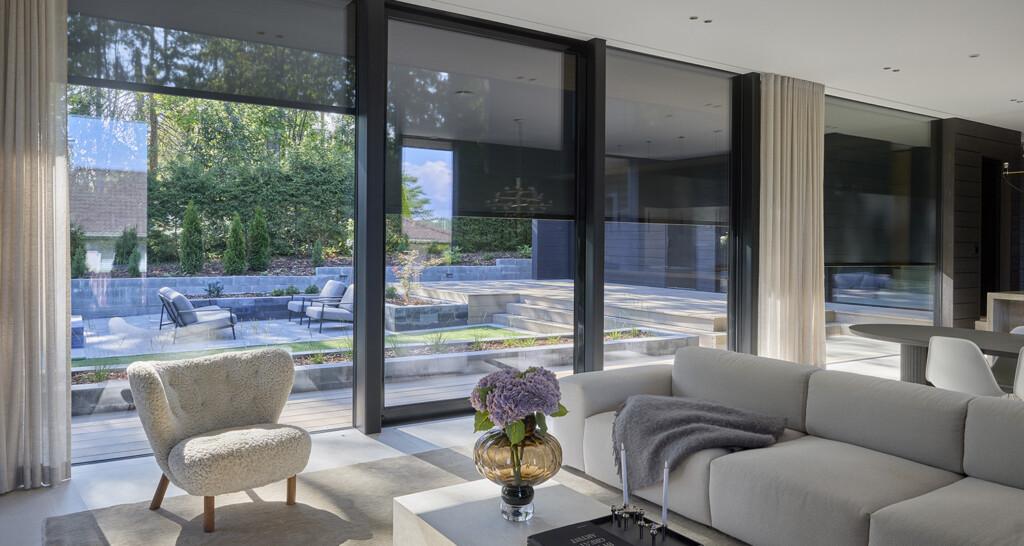
Perhaps the most common choice for solar shading today is either external or internal screen blinds. The benefit of external blinds is that they block heat radiation before it enters the building, making them significantly more effective than internal blinds. However, external systems require more maintenance, such as cleaning. In some cases, external installation isn’t possible, and internal versions are used instead. In living spaces, mesh-like screens are common, allowing visibility even when closed. The darker the screen color, the better the transparency—black screens offer much better visibility than white ones. For internal blinds, the most effective models have a reflective coating on the back, which helps block heat. These internal screens protect against glare and direct sunlight and reduce heat radiation. At night, they also offer light privacy from the outside. Some suppliers offer combination screen blinds with both blackout and solar control features.
Blinds Can Be Neatly Recessed into Structures If Planned Early
For a clean finish—especially with HTWS windows—blinds, whether internal or external, should be considered already during the structural design phase. The dimensions of the recess depend on the surface area of the screen, so it’s important to consult the screen supplier early. Even if you’re not yet sure whether you’ll use screens, it’s smart to reserve space for them. The same goes for electrical planning. While battery-powered blinds exist, mains-powered versions are usually more affordable and eliminate the need for battery charging. Both internal and external blinds can be controlled individually or integrated into home automation systems. For example, screens can be automated to lower based on light levels to optimize solar protection.
Other Solar Shading Options
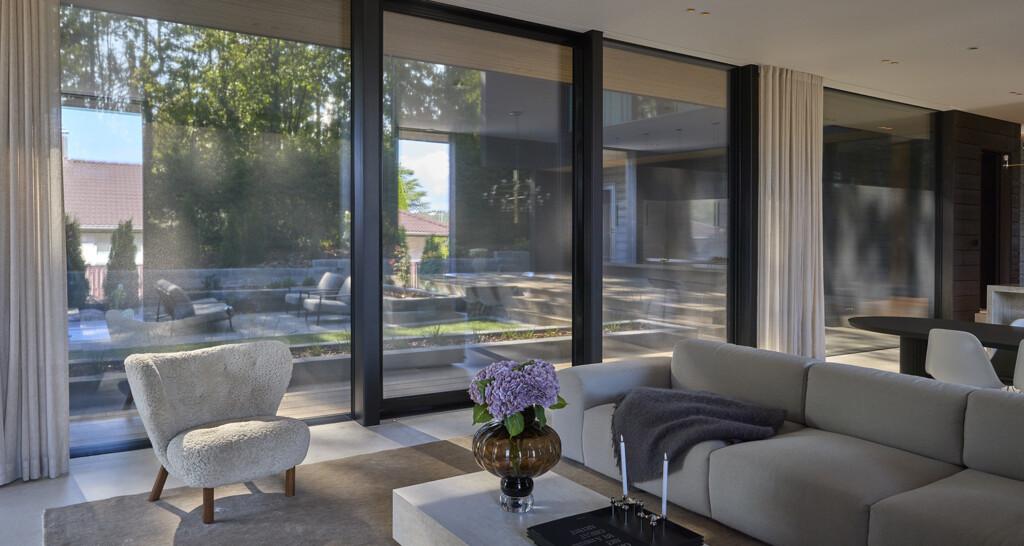
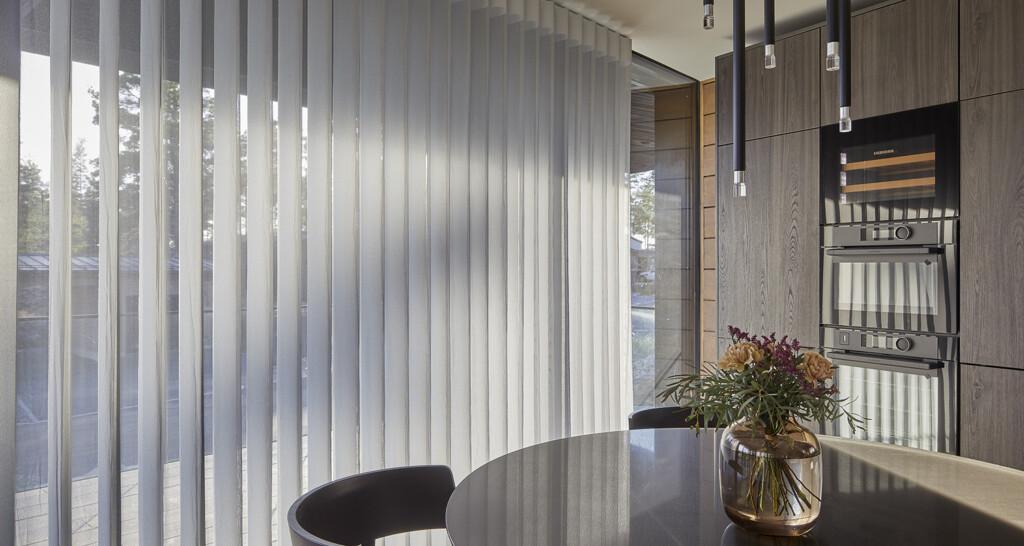
Alternatives to screen and blackout blinds include vertical blinds, pleated shades, and Venetian blinds. Compared to these, screens offer the advantage of visibility even when closed. Traditional curtains and sheer drapes in front of windows can also block direct sunlight and slightly reduce heat gain.
Plan Solar Shading Early in the Project
Today, solar shading must be considered a part of energy-efficient, modern construction. The earlier it’s planned, the more seamlessly it can be integrated into both architecture and interior design.
Katja Suominen, Interior Designer, KS Interiors Oy.