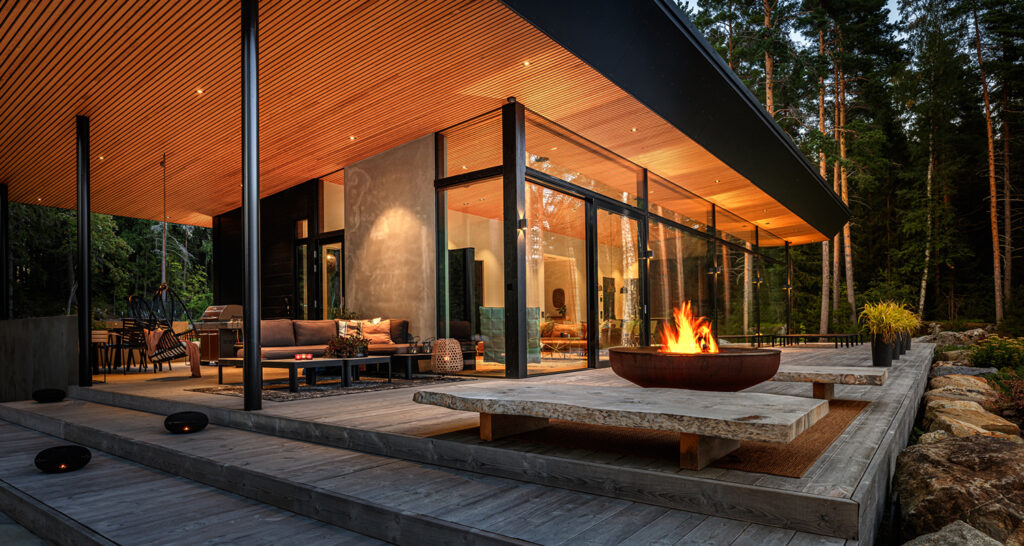
Interiors of a Modern Log House
Interior design is an essential part of the home’s overall concept. The architectural appearance and atmosphere of a log house form a strong foundation, to which interior designers bring their expertise and creativity. A well-designed interior accentuates the unique features of the house, enhances living comfort, and gives the home a personal character.
We collaborate with numerous interior designers and interior architects. Like architects, interior designers are important partners. An interior designer may be the client’s own or one of our partners. Working with a skilled interior designer ensures that a log house is both aesthetically pleasing and functionally perfect. Interior designers bring expertise and ideas that enrich the look and livability of each home. The log house becomes a harmonious whole in which architecture and interior design complement each other.
Natural Materials in Interior Design
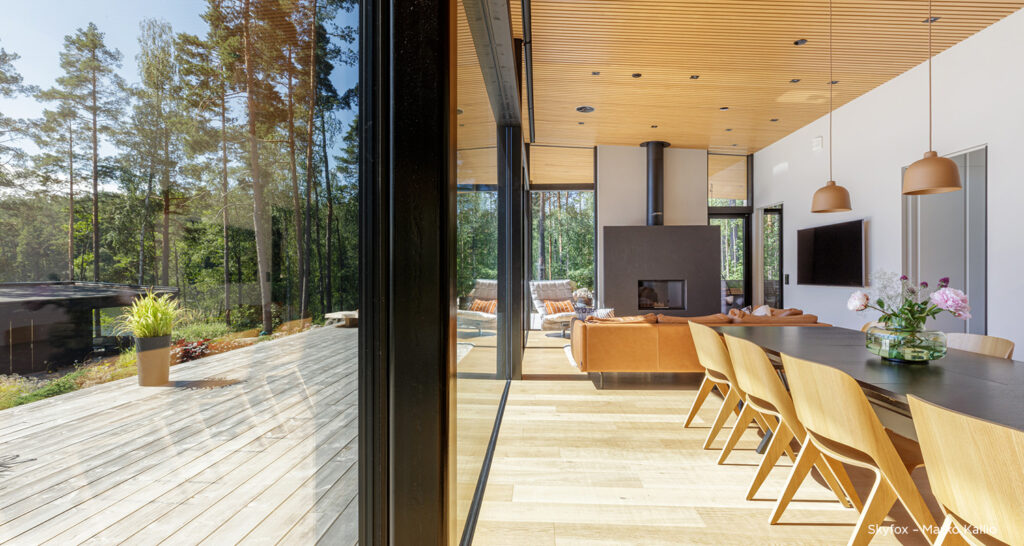
Contemporary architecture favors large windows that provide views of the surrounding nature whenever possible. This brings nature strongly into the interior design. The log house itself practically demands that the designer favor natural materials, and the landscape visible through the windows underscores this need even more.
It is said that being in nature slows our heart rate and relieves stress. Why not aim for the same in your home? A calming place to unwind and recharge is a good idea. This is where biophilic, wellness-enhancing interior design comes in—where connection to nature plays a key role. Since humans have an innate need to be connected to nature, the solution is to bring nature into the interior. A log house’s clean indoor air, abundant natural light, the view through windows, wooden surfaces, and other natural materials remind us of that connection. And houseplants literally bring nature indoors.
Suitable materials for a log house—besides wooden surfaces—include various types of stone finishes. These can appear in facades, floors, walls, fireplaces, bathrooms, kitchens, and cabinetry.
Color Palette for a Log House
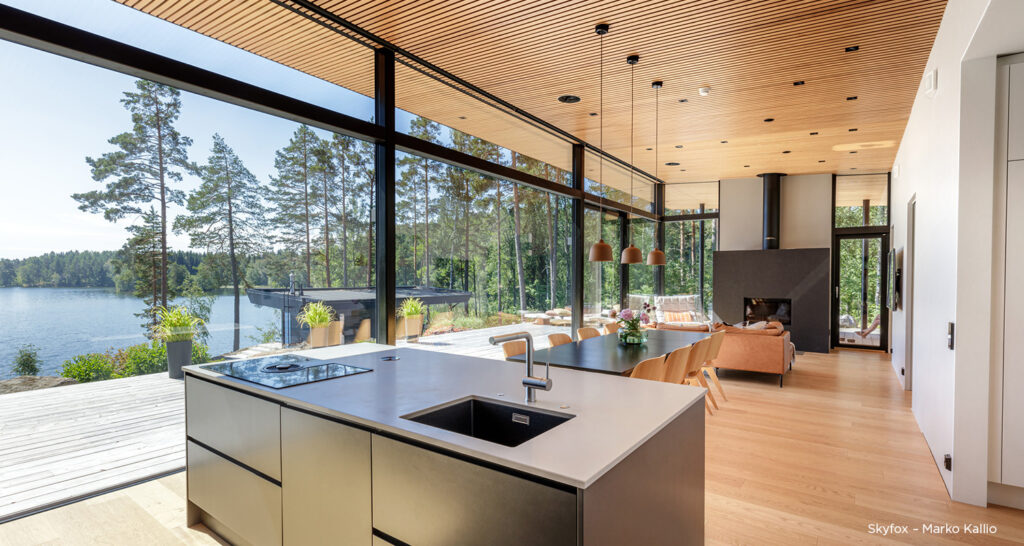
A log house suits earthy tones and a muted palette that feels natural and harmonious. Interiority might draw on the warm reddish‑brown of conifer trunks, the grey of rock formations, the green of pine needles, or the deep blue of a lake on a bright summer day—or whatever personally feels most fitting. A key tip is to test paint shades (or chosen textiles) in situ or at least oriented correctly—since direction, time of day, season, weather, and surroundings all influence how colors are perceived
Many find the finishing of the logs challenging. You should consider what atmosphere is desired: whether wood is allowed to patinate naturally or if you want UV‑protected finishes; what materials are used for ceiling and floor; and whether the logs are spruce or pine. But never start without testing shades in advance.
Combining different wood types is often feared too much. You can safely mix woods of similar tones—and that can enrich the space. If in doubt, a rule of thumb is to combine only warm‑ or only cool‑toned wood types. It’s best to view surfaces in the context of the entire home rather than isolate individual materials. If this feels overwhelming, definitely seek help from your interior designer.
Sustainability and Timelessness in Design
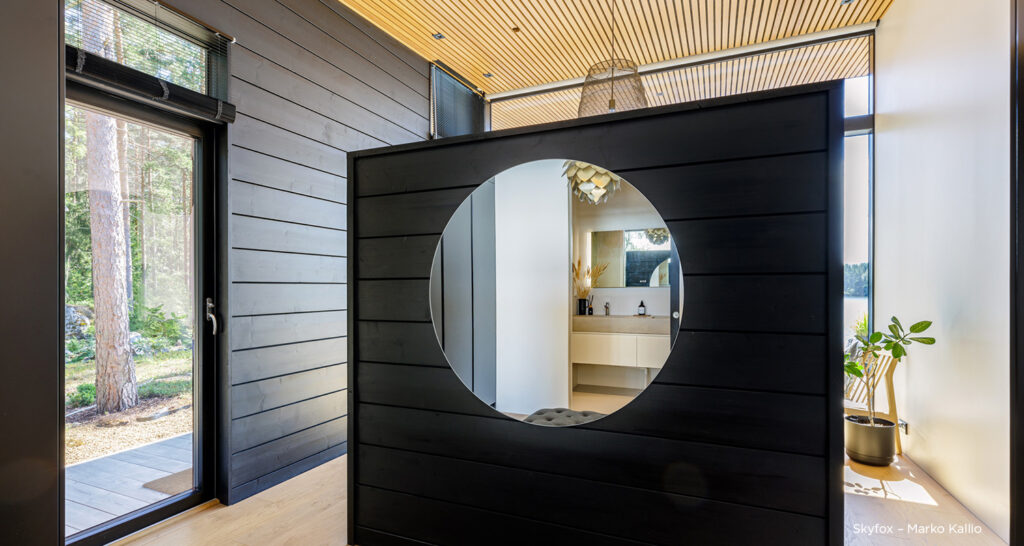
When choosing furnishings, favor modular and easy-to-maintain pieces. For example, a high-quality sofa with removable covers can last for decades. Natural materials—in finishes, furniture, and textiles—create a luxurious, timeless space. The passage of time shows as a beautiful patina—but if patina isn’t desired, solid surfaces can always be renewed with proper maintenance. A solid wood dining table can always be sanded and re‑sealed, whereas veneer furniture is harder to refurbish. Log houses are long‑lasting—why choose furniture that you’ll keep only briefly? Long-lasting furniture is also the ecological choice.
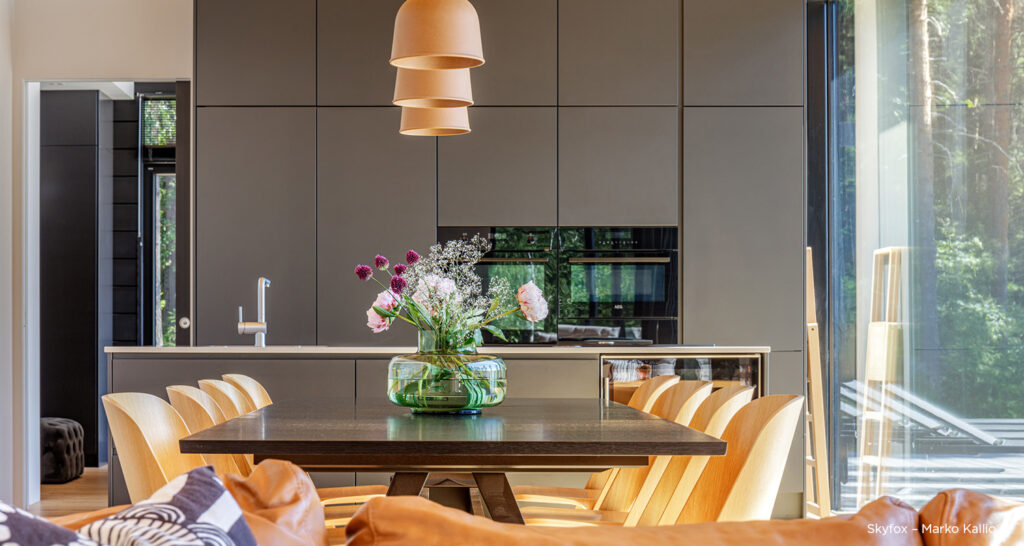
Let Personality Show in the Interior
At Polar Life Haus, a personalized home starts with architect‑driven planning tailored to the client. It’s also worth investing in built‑in furniture design and thinking outside the usual boxes: could freestanding furniture be replaced with built‑ins? Do functions need to be laid out in the traditional way, or might spaces serve multiple purposes? Well‑designed built‑ins give a tailored, premium feel. A home reflects its resident’s daily habits and style. Adding personal touches—items, memories, stories—brings interest in entirely new ways. The craftsmanship aesthetic can be visible, and homes can be truly unique. Combining old memories and furnishings with a contemporary log house can feel challenging—but done well, the layers of time make a home individual and stunning.
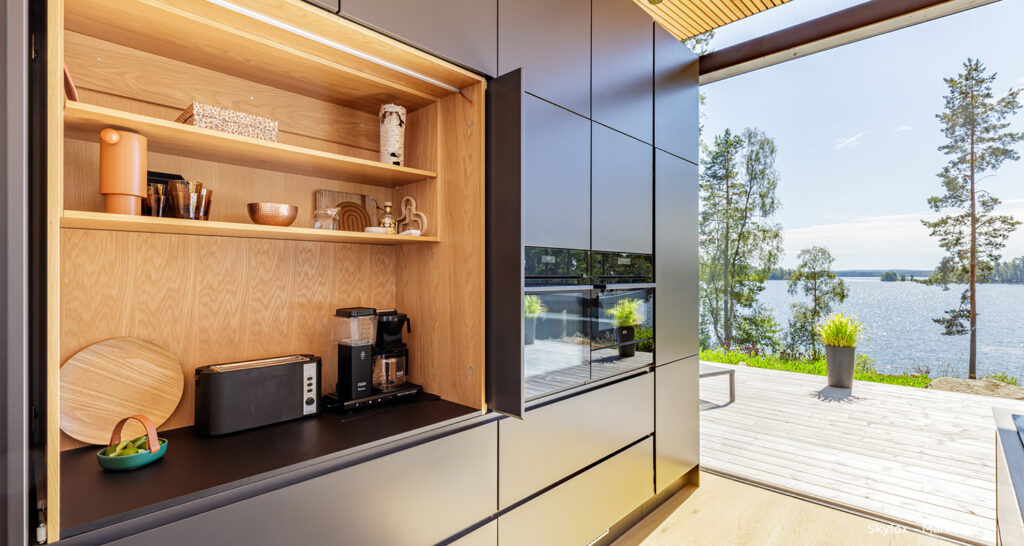
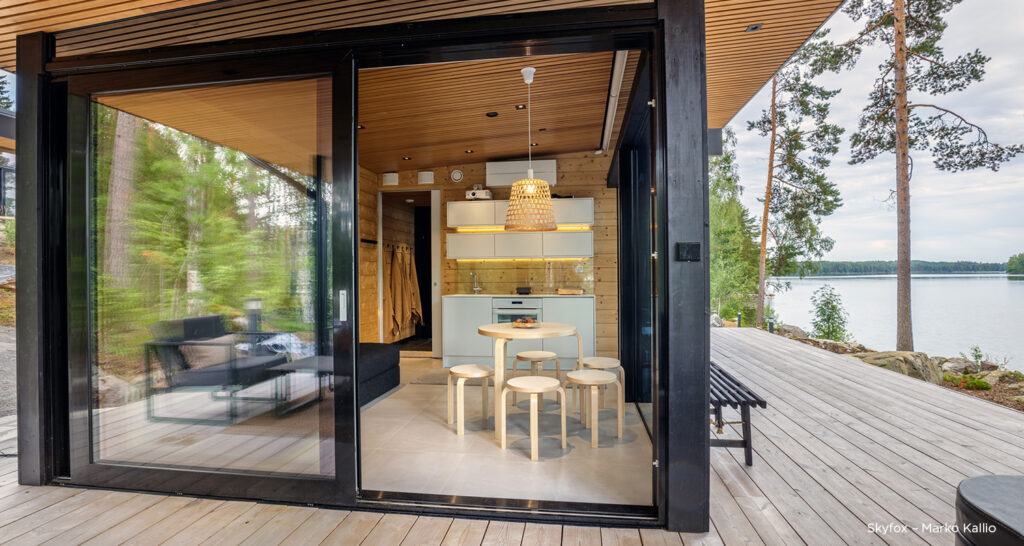
Designer Tips for Builders
- If you are working with an interior designer, bring them into the project as early as possible—there’s never too early. Finish plans for surface materials, built-ins, and lighting ideally before finalizing HVAC, electrical, and plumbing (LVIS). Electrical and lighting layout for a log house must take into account factory-drilled wooden channels for wall lights and outlets. The interior plan also determines locations and types of plumbing fixtures and wells—including possible concealed installations.
Start fixed and free furniture planning early in the construction process to optimize spaces and functionality. If the ideal kitchen layout requires a wall moved by 10 cm, it may be too late once stud walls are in place.- Building systems and the desired aesthetic don’t always go hand in hand. To avoid unpleasant surprises, plan for integrating and concealing technical systems in a timely manner as part of the interior design.
- Don’t forget acoustics. Although logs themselves have good acoustic properties, large window surfaces reflect sound effectively—especially in high-ceilinged spaces.
- Sometimes you must budget—decide what to invest in and where to save. I’d advise focusing on things that are hard to replace later. Appliances and plumbing fixtures are much easier to swap out than, say, flooring.
- Don’t chase design trends blindly—trust your intuition. You can look for ideas on social media, but trying to pack every trend into one space can make the result feel fragmented. Instead, find your thing—the idea that truly makes your heart beat faster.
Katja Suominen, Interior Designer, KS Interiors Oy.
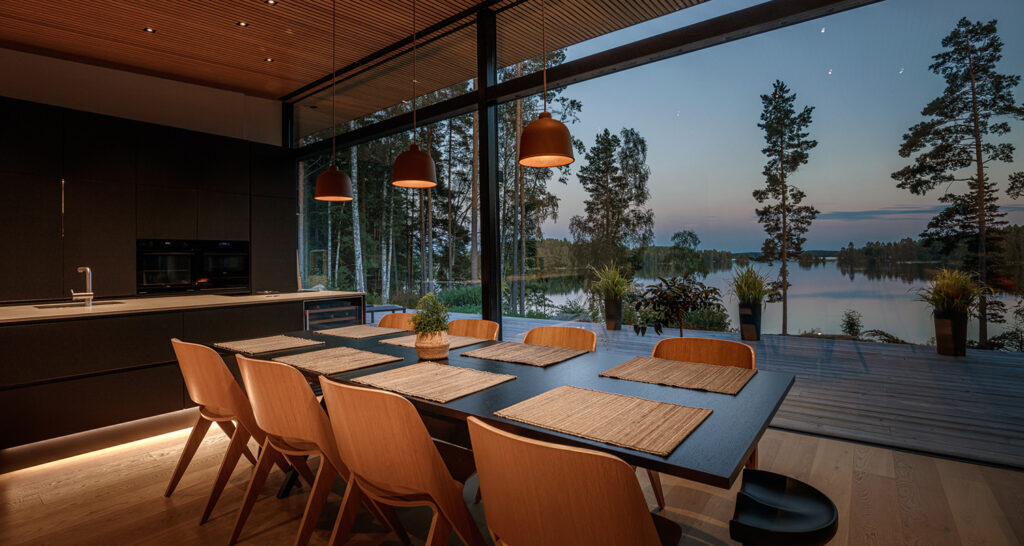
In Conclusion
Our network of interior designers and architects includes top professionals who know how to blend modern design with the values of log construction. Their expertise and creativity are visible in every detail, crafting homes that feel both contemporary and timeless.
The interior of a modern log house is an artful combination of natural materials, timeless furniture, and personal touches. Collaboration between the client and professionals ensures each home is unique, functional, and beautiful. Emphasizing connection to nature and ecological principles makes a log house not only aesthetically pleasing but also a sustainable choice.